
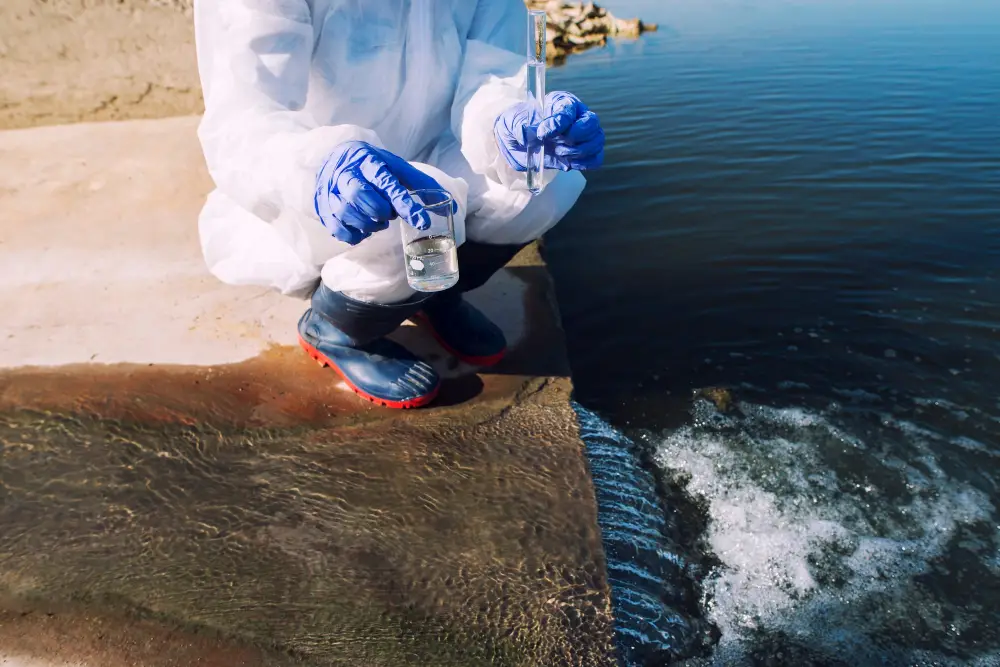
As we move through February 2026, the real estate landscape in Fort Lee is facing a quiet but significant shift. While much of the borough’s attention is focused on high-rise development and bridge traffic, homeowners in residential pockets—particularly those utilizing private wells—are discovering an unexpected trend in their mandatory water quality disclosures. Recent reports filed under the New Jersey Private Well Testing Act (PWTA) are revealing surprising patterns of arsenic contamination that are catching both long-time residents and new real estate buyers off guard.
In 2026, arsenic is no longer just a “rural” concern or something restricted to the southern NJ coastal plains. It has become a primary factor in Bergen County property transfers, often appearing in locations where historical data previously suggested low risk. Understanding these new patterns is essential for any seller looking to maintain their home’s value or any buyer concerned about long-term health.
The Shift in 2026 Arsenic Data
For years, the general consensus was that arsenic in Northern New Jersey was relatively predictable, tied strictly to specific shale formations. However, the latest required tests are showing that arsenic “hotspots” in Fort Lee are becoming more localized and sporadic. We are increasingly seeing cases where one home passes with flying colors while the property next door fails significantly.
This “checkerboard” pattern is largely due to the complex geology of the Palisades. Arsenic in our region is almost entirely naturally occurring, leaching from arsenic-bearing minerals in the bedrock. In 2026, as deeper wells are drilled or existing wells are taxed by shifting groundwater tables, we are seeing water being pulled from mineral-rich veins that were previously untouched. This makes the PWTA mandate not just a legal hurdle, but a critical safety check for every individual lot.
The “Strict 5” Standard: New Jersey’s Leading Role
One reason Fort Lee sellers are “surprised” by a failure is the stringency of New Jersey law. While the federal EPA limit for arsenic is 10 micrograms per liter (µg/L), New Jersey enforces a much stricter Maximum Contaminant Level (MCL) of 5 µg/L.
This 5 µg/L standard is among the most protective in the nation. In 2026, many homes that would have “passed” a federal test are being flagged as “fails” under the PWTA. This creates a significant real estate challenge, as a result of 6 or 7 µg/L—though seemingly low—legally prevents a property transfer until the results are disclosed and, in most cases, remediated to satisfy lender requirements.
Why Arsenic is a “Silent” Deal-Breaker
The danger of arsenic lies in its invisibility. As we emphasize on our blog, arsenic has no taste, odor, or color. A Fort Lee homeowner could drink their well water for twenty years without realizing they are being exposed to a known human carcinogen.
In 2026, the health risks associated with chronic low-level arsenic exposure are well-documented:
- Cancer Risks: Long-term ingestion is linked to bladder, lung, and skin cancers.
- Developmental Issues: New research suggests that even low levels can affect the cognitive development of children and infants.
- Cardiovascular Impact: Chronic exposure is tied to an increased risk of heart disease and diabetes.
Because the PWTA requires the lab to report results directly to the local health authority, a failed arsenic test becomes a matter of public record for that specific address. This level of transparency is designed to protect the buyer, but for an unprepared seller, it can lead to a sudden and stressful “scramble” to install expensive treatment systems before the closing date.
The “Worker Tank” Strategy: Remediation in 2026
If a Fort Lee property fails its required tests for arsenic, the path forward is standard but specific. According to the NJDEP, the most effective solution for our local geology is a Point-of-Entry (POE) Adsorption System.
This system typically uses two tanks filled with iron- or titanium-based media. The first tank (the “worker”) does the heavy lifting, while the second tank (the “polisher”) ensures no trace amounts of arsenic reach the home’s taps. In 2026, these systems are highly advanced, often featuring digital meters that alert the homeowner when the media in the first tank needs to be replaced. For a real estate transaction to move forward, the seller must typically prove the system is installed and provide a post-treatment “confirmatory” test showing levels below 5 µg/L.
The Importance of “Raw Water” Disclosure
A common mistake Fort Lee sellers make is trying to bypass the “raw water” test. The PWTA is very clear: the sample must be taken before any existing treatment system. Even if you have a kitchen-sink filter that removes arsenic, the state requires the “raw” groundwater data to be part of the official report.
This ensures the buyer knows exactly what is coming out of the ground. In 2026, sophisticated buyers in our locations are looking at the “raw” numbers to estimate the future maintenance costs of the filtration media. If the raw arsenic is 40 µg/L, those tanks will need servicing much more frequently than if the raw level is 8 µg/L.
Historical Land Use and Arsenic Spikes
While most arsenic in Fort Lee is geological, 2026 patterns are also hinting at “legacy” contamination. Historically, Bergen County was home to orchards and golf courses that used arsenic-based pesticides. While these uses ended decades ago, the arsenic can remain bound to the soil and slowly migrate into shallow wells.
When a property near these historic zones is tested today, the PWTA results can show spikes that are significantly higher than the regional average. This is why a “neighbor’s pass” is never a guarantee for your own property. Every well is its own unique window into the local environment.
Conclusion: Proactive Testing is the Best Defense
In 2026, the surprising arsenic patterns in Fort Lee serve as a reminder that water quality is a dynamic part of homeownership. Whether you are in one of our many residential locations or managing a commercial property, the only way to navigate these “surprising” results is through early and accurate data.
The most effective next step you can take to ensure your home sale stays on track is to perform a pre-listing audit of your well water. By identifying an arsenic issue before you are under contract, you can handle remediation on your own terms and present a “clean” home to potential buyers. If you are ready to secure a certified, lab-backed report that meets all NJ state standards, the best path forward is to contact a specialist today. In the 2026 Fort Lee market, the “unfiltered truth” is your most valuable asset.